Why Traditional Label Printing Machines Cause High Consumable Waste | Cost Saving Solution
May 21, 2026
Introduction
Flexographic printing has become the mainstream process in the global commercial label manufacturing industry, widely adopted for producing self-adhesive labels, packaging labels and various industrial sticker products due to its high efficiency and versatile material compatibility. In the highly competitive label production market, production cost control is the core factor that determines the profit margin of small and medium-sized label factories. Many factory owners are troubled by a common industry problem: even with standardized production operations, traditional flexo label printing machines suffer from extremely high consumable loss, resulting in rising overall production costs and declining market competitiveness.
Excessive ink waste, label substrate loss, and repeated material scrapping caused by outdated flexo printing equipment have become the biggest operational pain points for small and medium-sized flexo printing factories. This article will deeply analyze the key reasons for high consumable waste of traditional flexo label printing machines and share practical, implementable cost-saving solutions suitable for small-scale flexo label printing production scenarios.
Main Reasons for High Consumable Waste in Traditional Flexo Label Printing Machines
Most traditional flexo label printing equipment is designed for single-mode mass production, equipped with outdated mechanical structures and imperfect intelligent control systems. These inherent defects lead to uncontrollable consumable loss in daily flexo printing production, which greatly affects the profitability of label factories. The main reasons are summarized into four core aspects:
1. Inaccurate Manual Calibration Causes Massive Substrate Waste
Traditional flexo label printing machines rely heavily on manual adjustment for color registration, tension control, and position calibration. Workers need multiple trial printing tests to adjust parameters before formal mass flexo production. For small-batch, multi-style personalized label orders that dominate the business of most small label factories, frequent parameter replacement and manual debugging will generate a large number of waste label substrates.
In addition, manual tension control is unstable and inaccurate, which easily causes label roll deviation, wrinkling, stretching and fracture during high-speed flexo printing. Unstable operation further increases the material scrap rate, bringing unnecessary material loss to label printing enterprises.
2. Outdated Ink Supply System Leads to Serious Ink Waste
The ink supply structure of traditional flexo label printing machines is relatively simple and cannot achieve precise quantitative ink output. In actual flexo printing operations, factory workers often pour excess ink into the ink tank to avoid printing discontinuity and broken patterns during production.
Residual ink in traditional equipment cannot be recycled effectively. After long-term exposure to air, the leftover ink is prone to volatilization, deterioration and contamination, resulting in direct ink waste. At the same time, uneven ink output of outdated flexo equipment easily causes color difference, color fading and incomplete coloring on finished labels. To ensure order quality, factories have to reprint entire batches of defective products, which doubles the consumption of ink and label substrates.
3. Low Equipment Compatibility Leads to Order Adaptation Waste
Traditional flexo label printing machines feature single fixed production parameters with poor compatibility for different label materials, sizes and printing processes. Most small and medium-sized label factories undertake mixed orders, including small-batch customized labels and large-batch conventional packaging labels.
When switching between different order types, traditional flexo machines cannot intelligently adjust operating parameters. It is prone to various printing defects such as blurry patterns, position deviation, incomplete ink coverage and uneven color. A large number of semi-finished products are scrapped during order switching, which is one of the main causes of high comprehensive consumable loss for mixed flexo printing production.
4. Frequent Equipment Failures Indirectly Increase Consumable Loss
Traditional flexo printing equipment has insufficient mechanical stability and poor durability. After long-term continuous operation, it is prone to common failures including gear jitter, roller deviation, circuit instability and transmission system errors. Sudden equipment shutdowns and operational abnormalities directly interrupt the flexo printing process and produce large quantities of defective and waste labels.
Moreover, frequent equipment failures require repeated debugging, parameter resetting and trial printing after maintenance, which continuously consumes a large amount of ink, substrates and other auxiliary consumables. These invisible losses greatly increase the overall production cost of flexo label factories.
Practical Cost-Saving Solutions for Small Factory Flexo Label Printing
Aiming at the common consumable waste pain points of traditional flexo label printing machines, optimizing equipment configuration and production modes is the most fundamental and effective solution. Combined with the actual production characteristics of small and medium-sized flexo label factories, we have sorted out low-threshold, practical cost-saving and efficiency-improving measures to effectively reduce consumable loss and cut down comprehensive production costs in a short period.
1. Replace Traditional Equipment with Intelligent Precision Flexo Printing Machines
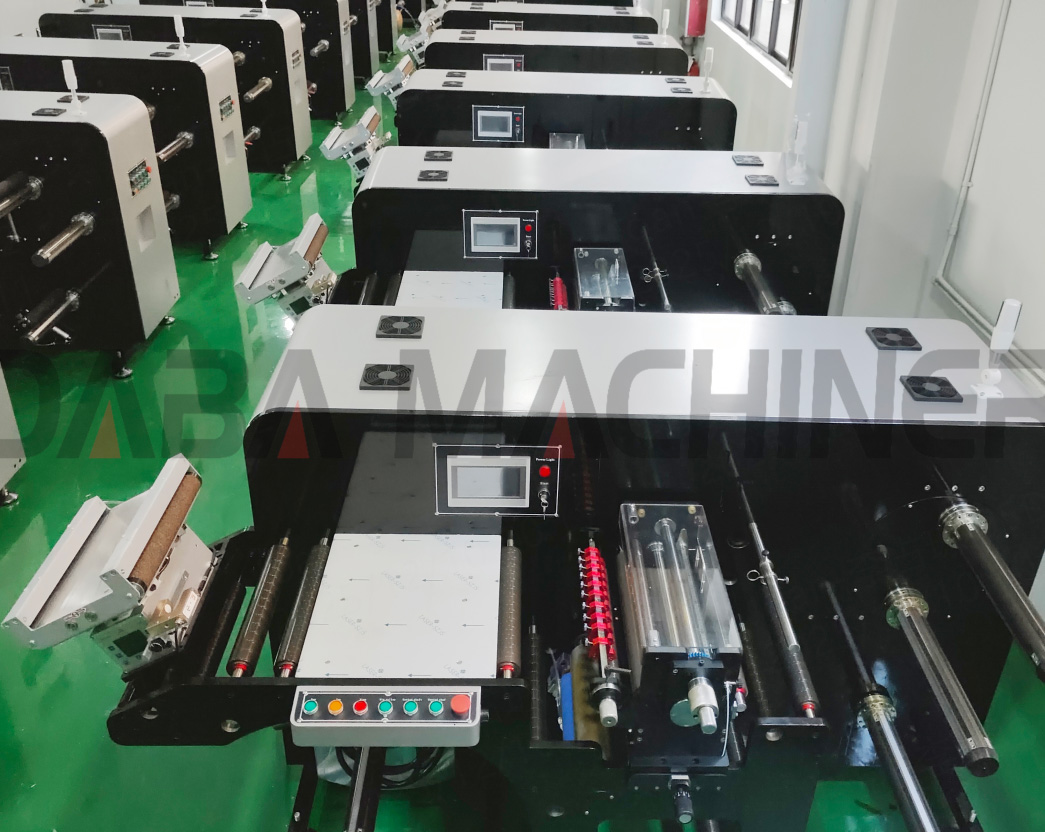
Upgrading to intelligent automatic flexo label printing machines is the core solution to fundamentally solve flexo printing consumable waste. Different from traditional manually debugged flexo equipment, modern intelligent flexo printing machines adopt servo automatic calibration systems, supporting one-key parameter setting and high-precision automatic color registration.
This intelligent design greatly reduces repeated trial printing times before formal production, cutting down substrate waste by more than 30%. As a professional flexo label printing equipment manufacturer, Daba Machinery’s automatic flexo label printing machine is equipped with an advanced intelligent quantitative ink supply system.
The equipment can automatically identify printing patterns and material thickness, adjusting ink output accurately in real time to achieve precise ink supply without excess residue. The recyclable closed ink tank design effectively avoids ink volatilization and deterioration, greatly reducing flexo ink waste. Meanwhile, the high-precision constant tension control system effectively prevents label wrinkling, deviation and fracture, significantly reducing the defective rate of finished flexo labels.
2. Optimize Production Operation Process to Reduce Human-Caused Flexo Waste
For small factories that have not yet completed equipment upgrading, standardizing and optimizing operational details can also effectively control flexo consumable loss. Factories need to formulate unified flexo equipment debugging standards and systematic operation specifications, and train operators to master rapid parameter adjustment and flexible switching skills.
Standardized operations can effectively reduce repeated trial printing and material scrapping caused by irregular manual operation. In addition, reasonably arrange production sequences for different orders, concentrate similar specification orders for batch production, and reduce frequent equipment parameter switching, so as to minimize debugging waste in daily flexo printing production.
3. Conduct Regular Equipment Maintenance to Avoid Indirect Consumable Loss
Regular professional maintenance and inspection of flexo printing equipment can keep the machine in optimal operating condition and avoid consumable waste caused by equipment aging, wear and sudden failures. Factory technicians need to regularly clean the flexo ink supply system, remove residual deteriorated ink, calibrate transmission rollers and tension systems, and replace worn parts in a timely manner.
Stable and well-maintained flexo printing equipment maintains high printing accuracy for a long time, effectively reducing the product scrap rate and indirectly lowering the comprehensive production cost of flexo label manufacturing.
4. Adopt Multi-Scene Adaptive Flexo Printing Equipment for Mixed Orders
Most small and medium-sized label factories have diverse order types, covering self-adhesive labels, waterproof labels, color printing labels, food packaging labels and daily chemical labels, requiring equipment with strong multi-scene adaptability.
Daba Machinery’s multi-functional flexo label printing machine perfectly adapts to mixed production of large-batch mass orders and small-batch customized orders. The equipment can intelligently switch operating parameters according to different label materials, sizes and printing requirements, completely solving the high waste problem caused by poor compatibility of traditional flexo machines. It greatly improves the comprehensive utilization rate of flexo printing consumables and maximizes factory production profits.
How Much Cost Can Intelligent Flexo Label Printing Equipment Save for Small Factories?
According to actual production data from our cooperative small and medium-sized flexo label factories, replacing traditional outdated equipment with Daba intelligent flexo label printing machines brings significant cost-saving effects. The comprehensive flexo consumable waste rate is reduced by 25%-40%, the ink utilization rate is increased by more than 35%, and the finished product yield is improved from less than 85% to over 98%.
For small label factories with an annual output of hundreds of thousands of flexo label products, the saved consumable costs and rework costs bring considerable profit growth. At the same time, stable printing quality and efficient production speed greatly improve order delivery efficiency, helping factories win more long-term cooperative orders and enhance market competitiveness.
Conclusion
High consumable waste of traditional flexo label printing machines is not only a daily operational problem, but also a core bottleneck restricting the profit growth of small and medium-sized flexo label factories. Manual debugging errors, backward ink supply technology, poor equipment compatibility and unstable mechanical operation are the key reasons for high production costs and low profit margins.
Upgrading to intelligent, high-precision and low-consumption flexo label printing equipment is the most direct and effective cost-saving and efficiency-improving solution for modern label printing factories.
If you are troubled by high consumable loss, low yield and high production costs in flexo label printing, Daba Machinery provides professional and customized low-consumption flexo label printing equipment solutions. We can tailor the most suitable printing equipment according to your factory order scale, product types and production demands, helping you comprehensively reduce production costs and improve corporate profitability.
NEXT: 2025 Eurolabel Packaging Printing Exhibition in Spain
PREV: End